
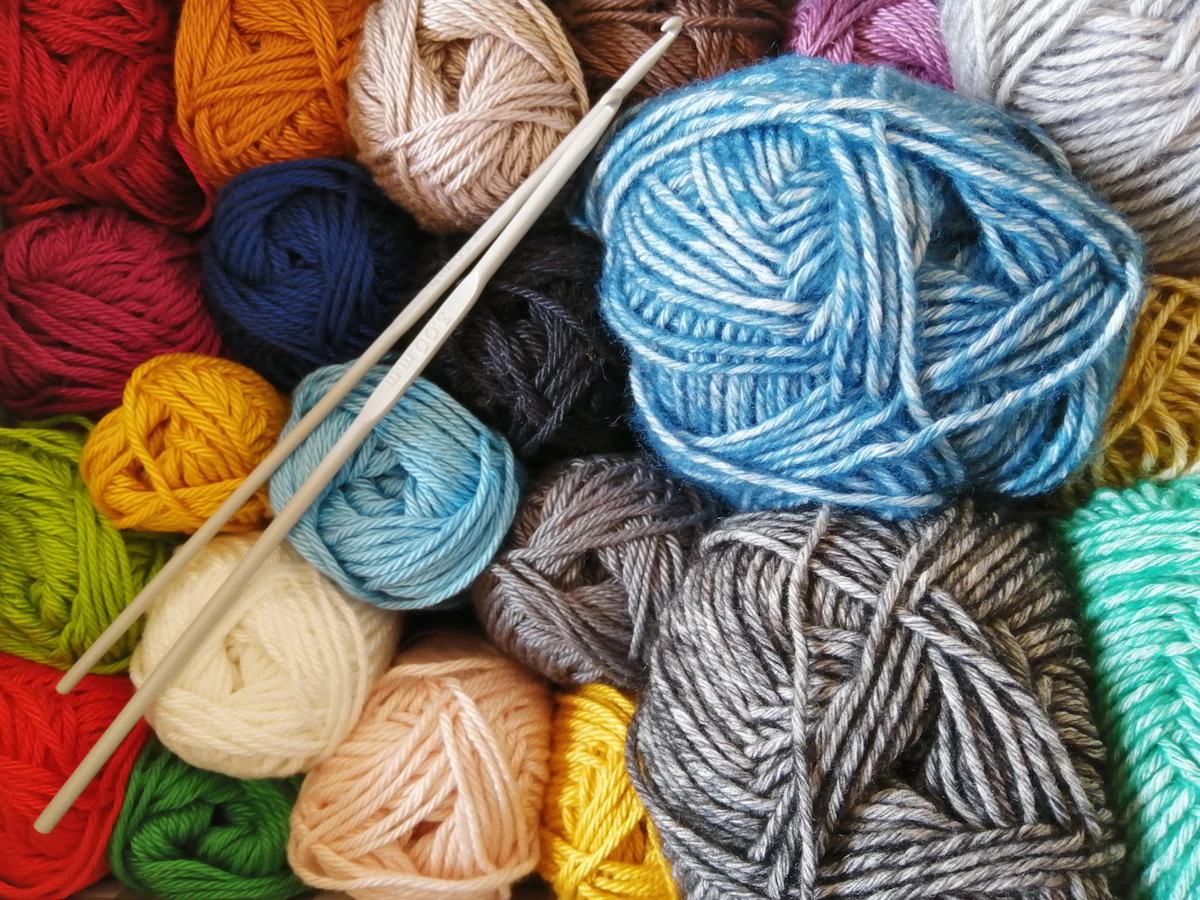
Welcome to the wonderful world of crochet! If you've been admiring beautiful handmade blankets, amigurumi, and cozy sweaters from afar, you are in exactly the right place. Crochet is a soothing, meditative craft that only requires two simple tools: a hook and some yarn. In this beginner's guide, we will walk through exactly what you need to know to make your very first stitches.
What You Need to Get Started
Before you dive in, gather these basic supplies. Don't worry about buying expensive tools yet—start simple!
🧶 Materials & Tools
- Yarn: A worsted weight (Category 4) yarn in a light color. Light colors make it easier to see your stitches.
- Crochet Hook: An H-8 (5.0mm) or I-9 (5.5mm) hook. This is a comfortable size for beginners.
- Scissors: Any small, sharp pair will do.
- Tapestry Needle: A large, blunt needle for weaving in yarn ends later.
How to Hold Your Hook and Yarn
There is no single "correct" way to hold your hook; it depends on what feels most comfortable to you. Try these two common methods:
The Pencil Grip
Hold the hook exactly as you would hold a pencil. This grip is excellent for fine, detailed work, as it allows for small, precise movements.
The Knife Grip
Hold the hook by resting it against your palm, similar to how you would hold a knife to chop vegetables. This grip is often preferred for beginners because it requires less wrist movement.
For your yarn hand (usually your non-dominant hand), simply drape the yarn over your index finger to maintain a gentle tension. You don't want it too tight, or your stitches will be hard to work into!
The 3 Foundational Stitches
Every crochet project is built on a few basic stitches. Once you master these, the crochet world is yours.
1. The Slip Knot
This is how you attach the yarn to your hook.
- Make a loop with the yarn, leaving a 6-inch tail.
- Insert your hook into the loop.
- Pull the working yarn through the loop and tighten it onto the hook. It should slide easily but not be loose.
2. The Chain Stitch (ch)
Chains are the foundation of almost every project.
- Yarn over (wrap the working yarn over your hook).
- Pull the hook through the loop on your hook.
- You have made one chain! Repeat this process as many times as your pattern requires.
3. The Single Crochet (sc)
This is the most common and versatile stitch in crochet.
- Insert your hook into the center of the next stitch (or the second chain from your hook if you are just starting).
- Yarn over and pull up a loop. You now have two loops on your hook.
- Yarn over again and pull through both loops on your hook.
- You have completed one single crochet!

Essential Beginner Tips
- Tension is everything: If your stitches are too tight, you won't be able to insert your hook. If they are too loose, your project will look messy. Practice holding the yarn with an even, gentle tension.
- Count your stitches: At the end of every row, count your stitches. It is incredibly easy to accidentally add or drop a stitch at the very edges.
- Don't stress about perfection: Your first square will probably be wonky. That is a rite of passage! Keep practicing.
Frequently Asked Questions
What is the easiest thing to crochet for a beginner?
A simple square "granny square" or a basic rectangular scarf using only the single crochet stitch are the best first projects. They help you practice your tension without the pressure of complex shaping.
Why does my crochet curve or get wider at the edges?
This usually means you are accidentally adding a stitch at the beginning or end of your row. Remember to count your stitches and don't work into the very first chain at the start of a row unless the pattern specifically tells you to.
How long does it take to learn crochet?
You can learn the basic mechanics (slip knot, chain, and single crochet) in about an hour. However, building the muscle memory to hold your hook comfortably and create even stitches usually takes a few days of consistent practice.
Ready for your first project?
Now that you know the basics, check out our Free Crochet Patterns and look for the "Beginner" tag!
Comments
Post a Comment